Audio · Video and LED · Lighting · Staging · Rigging

Everything the show needs.
On one estimate.

Ten disciplines, owned outright and run by our own crew, and the talent booked when an event needs an act. Under each one, the thing that decides what you actually need.

01 — The disciplines

Ten disciplines, ten questions.

If the show needs it, we have it.

1.00

Audio

The room decides this before any of the equipment does. A hard ballroom with a long reverberation time and a hundred people in it is a different problem at four in the afternoon and at eight in the evening, because bodies absorb. Speech wants intelligibility and music wants headroom, and the two are not the same specification. Outdoors there is nothing to reflect off and nothing to fight, so the problem stops being the room and becomes coverage, distance and the wind.

How many open microphones, and is anybody playing?

  • Speech reinforcement
  • Live music
  • Monitors
  • Wireless and RF
  • Distributed systems
2.00

Video and LED

Pitch is chosen against the nearest seat, not the furthest. The industry rule of thumb is about a meter of viewing distance per millimeter of pitch before the pixel structure becomes visible, so a front row three meters out and a camera pointed at the wall pull in opposite directions from a room where the closest seat is twelve meters back. Size is a legibility problem: the 8:1 rule says the furthest seat should be no more than eight times the image height away, and the smallest type on the busiest slide is what it is really measuring. Content is built to the wall's own pixel map rather than to 1080p, because a wall is rarely a broadcast aspect ratio.

Where is the nearest seat, where is the furthest, and is it on camera?

  • LED walls
  • Projection
  • Presentation management
  • Playback
  • Switching
3.00

Lighting

Two jobs that want different answers. Light for the room is a look — color, contrast, where the eye goes. Light for a camera is a specification, because a face that reads beautifully to an audience sitting in the dark is underexposed on the stream and there is no fixing it afterwards. Trim height decides the angle, the angle decides whether a presenter is lit or shadowed, and the ceiling decides the trim. A room with nothing to hang from is not a room without lighting; it is a room where the lighting stands on the floor and the sightlines have to be drawn again.

Is it being recorded or streamed, and how high is the ceiling?

  • Key and fill
  • Stage wash
  • Moving light
  • Room and architectural wash
  • Control
4.00

Staging

Deck height is set from the back of the room, not the front. Too low and the furthest third of an audience watches the back of the head in front of them; too high and the front row is looking up somebody's nose and the camera is shooting the underside of a lectern. Load rating is the other half and it is not negotiable — a grand piano, a drum riser and forty people standing for a group photograph are three different loads on the same deck. Anything over a certain height wants stairs and a rail, and that is a floor-plan decision rather than an afterthought.

Where is the furthest seat, and what is going on the deck?

  • Decks and risers
  • Stairs and rails
  • Skirting
  • Runways and thrusts
  • Rolling risers
5.00

Rigging

What a building will let you hang, and where, is the first question of a production and the one most often asked last. A venue publishes its rigging points, its per-point capacity and its approval process, and a plot goes in and comes back approved before anything is loaded on a truck. Where the roof will not take it, or where there is no roof, the answer is ground support — towers and a header standing on the floor — which is heavier, wants more floor and costs sightlines, and is the reason a ceiling height gets asked about before a pitch does.

What does the venue publish for hang points, and who approves the plot?

  • Motors and truss
  • Ground support
  • Point loads and plots
  • Structural review
6.00

Scenic

Scenic is what gives a room a back to it. A general session in a ballroom with a wall of function doors behind the stage reads as a ballroom until something is put between the two, and after that it reads as a room built for the event. The same goods do the unglamorous half of the job: masking the cable, the cases, the storage and the backstage path that every room has and no photograph of a room ever shows. Anything hung in a public building carries a flame rating, and the certificate is part of the delivery.

What is behind the stage, and what has to be hidden?

  • Pipe and drape
  • Soft goods
  • Hard set
  • Backdrops
  • Masking
7.00

Tenting

A tent is a structure, not a cover. It has an engineered wind rating, an anchoring method that depends on whether it is going onto grass, asphalt or a deck, and in most jurisdictions a permit with a drawing attached — and the lead time on that is usually longer than the lead time on the tent. Once there is a roof there is everything a roof implies: a floor if the ground is not level, climate if it is August, and a rigging conversation of its own, because a tent frame is not a truss and what may be hung from it is a question for whoever engineered it.

What is the ground, and how far out are we?

  • Frame and pole structures
  • Flooring
  • Sidewalls
  • Climate
  • Lighting and power inside
8.00

Show power

Two numbers do two different jobs and confusing them is expensive in both directions. AVERAGE DRAW is what the show actually pulls across a day and it is what sizes a generator and what it burns. THE MAXIMUM is what the wiring has to survive — every fixture at full, a wall driven to full white by one holding slide — and it sizes the cable, the breakers and the distribution. Size the machine off the maximum and it runs all day at a fraction of load, which is wasteful and hard on it; size the cable off the average and something trips at the worst possible moment. Say which number is doing which job, every time.

Is there a tie-in, or is this coming off a machine?

  • Distribution
  • Tie-ins
  • Generators
  • Cable and connector families
  • Redundancy
9.00

Backline

The rider is the specification, and it is the most useful document in a production because it was written before anybody had seen the venue. Reading it early is what turns a list of equipment into a schedule: what has to be tuned and by when, what needs a riser under it, what the changeover between two acts actually takes in minutes, and which line on the list is the one nobody can play around if it fails. Spares are not optional on a bill with no interval.

Is there a rider, and how many changeovers?

  • Drums and percussion
  • Keys
  • Amplification
  • Risers and stands
  • Techs
10.00

Streaming and cameras

Who is watching decides all of it. A single locked camera on a lectern and a five-camera cut with a director are not the same job by degree; they are different jobs, with different crew, a different desk and a different rehearsal. A feed handed to a press pool or a broadcaster has to be clean, at their standard, on a connector they brought. And the upload is a piece of infrastructure like any other: venue internet is shared with everyone else in the building, so a stream that matters gets a path of its own and something behind it.

Who is watching, and is the room the audience or the studio?

  • Multicamera
  • Program feed
  • Encoding and delivery
  • Press and broadcast feeds
  • Record
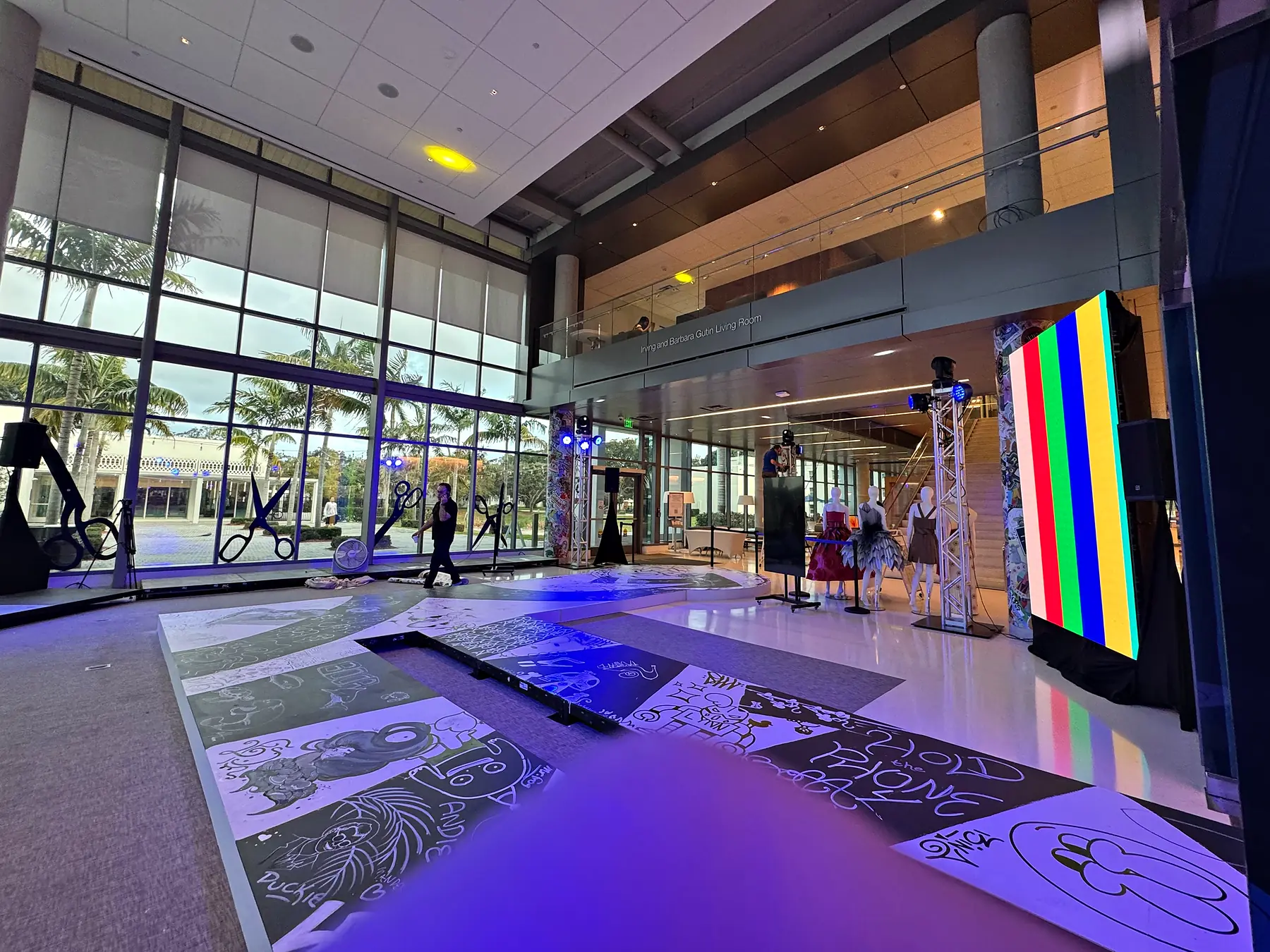
A runway laid down a glass-walled atrium with a printed graphic floor, tall portrait video panels carrying color bars at the far end, purple uplight across the space and daylight through the windows behind.
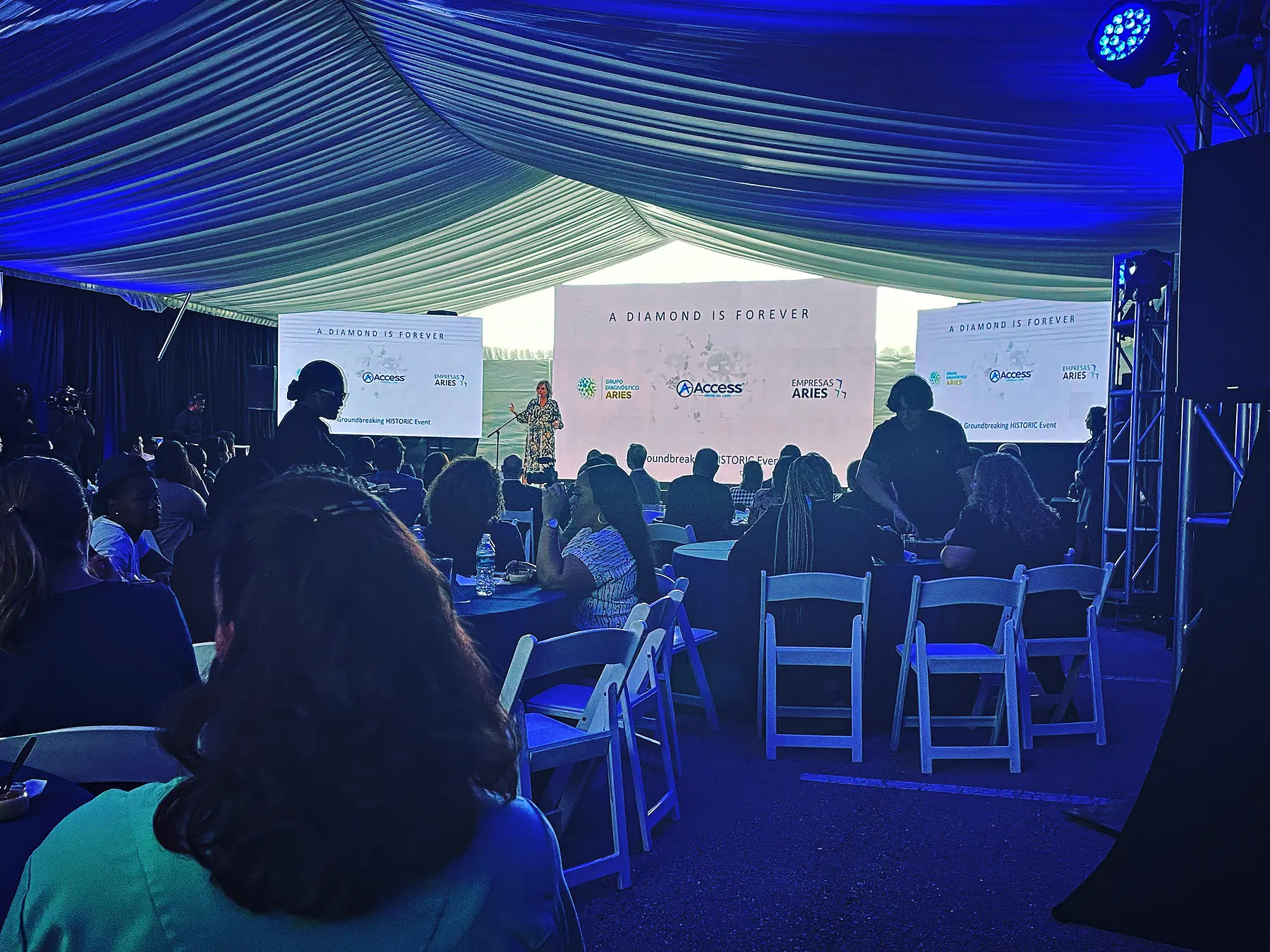
A tent with fabric draped in swags across its ceiling and lit blue, three screens across the far end of it carrying the same image, a speaker at a lectern between them and guests seated at round tables in front.
02 — What we need to know

Nine answers and we can scope it.

None of them is a budget question. Every one of them changes what you need.

  1. 01What kind of event, and what has to happen in the room
  2. 02The date, and how many days on site either side of it
  3. 03Where — the building, or the field
  4. 04Indoors, outdoors, or both
  5. 05Roughly how many people, and how they are seated
  6. 06Ceiling height, and what the venue publishes for hang points
  7. 07Where the power is, or whether there is any
  8. 08The load-in window, and who else is in the building
  9. 09Whether it is being recorded, streamed, or fed to anybody

Do not have all nine yet? Answer what you can. "Not yet" is a fine answer to most of them, and the rest are worth a phone call.

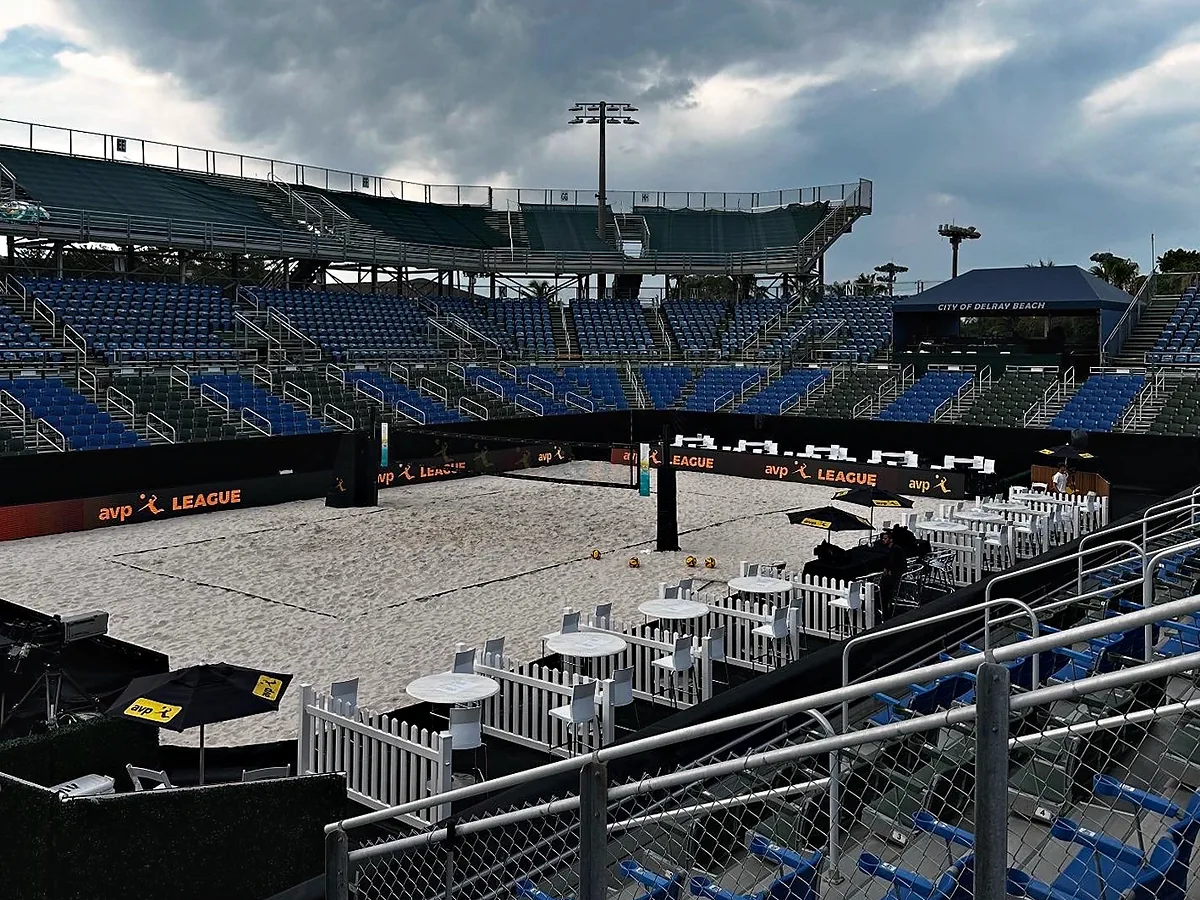
A sand court laid out on the floor of a stadium bowl under a heavy overcast sky, temporary seating and railings ringing it, and the permanent stands rising empty behind.
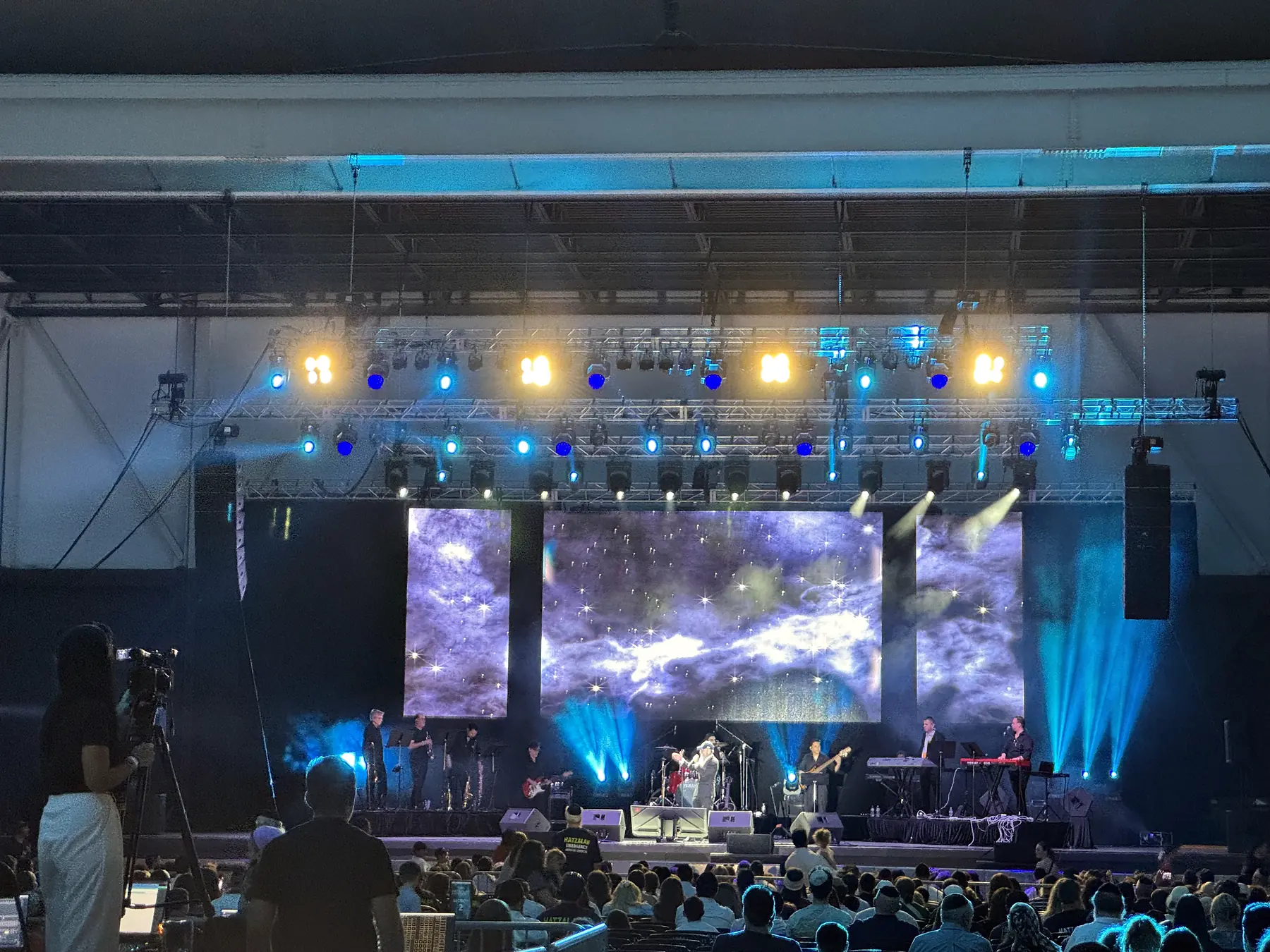
A concert under a high roof, three tall video panels behind the band carrying one image across them, two rows of lighting fixtures hung on truss above, and an audience filling the floor in silhouette.
03 — Start here

Tell us about your event.

The date, the venue, roughly how many people, and what has to happen in the space. We will reply within 24 hours.

Phone
561-750-4070
Also
954-978-8442
Email
sales@allonstage.com
Shop
500 Northeast 28th Court, Pompano Beach, FL 33064
Follow
InstagramFacebookLinkedIn